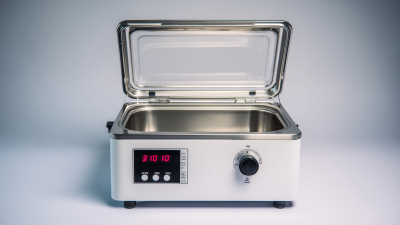
Picking the right supplier based in China can really make or break how well your Ultrasonic Cleaner performs, lasts, and keeps running safely. When you’re shopping globally, it’s not just about getting a good price — you want stable manufacturing, clear specs, quick responses, and real proof behind every quality claim.
A good supplier? They should be able to explain options like frequency settings, tank size, heating controls, cleaning cycles, and basket designs without all the confusing jargon. For example, a 40 kHz machine is usually fine for cleaning general parts, but if you're working with more delicate items, different frequencies might be needed. Small details really matter here. Before placing an order, make sure to check out what stainless steel grade they use, how the electrical setup looks, how strong the packaging is, and how long they typically take to deliver.
Trusted manufacturers often offer sample tests, inspection reports, user guides, and after-sales support. These things help you verify the cleaning quality before you commit to a big purchase. Honest suppliers will also talk openly about any limitations — noise levels, energy consumption, compatibility with different liquids, or maintenance needs. Nobody's perfect, and that honesty is key.
If you’re a distributor, running a lab, a workshop, or managing a healthcare or industrial operation, it’s smart to look into how experienced the factory is and what quality procedures they follow. Ask for product videos, test results, compliance certificates, or references if you can. Sometimes, arranging independent inspections can give you that extra confidence in your choice. A solid Chinese Ultrasonic Cleaner supplier isn’t just about promising top performance — they connect engineering know-how with consistent production and genuine customer support. This guide highlights the qualities that help you make safer, smarter buying decisions from across the globe.
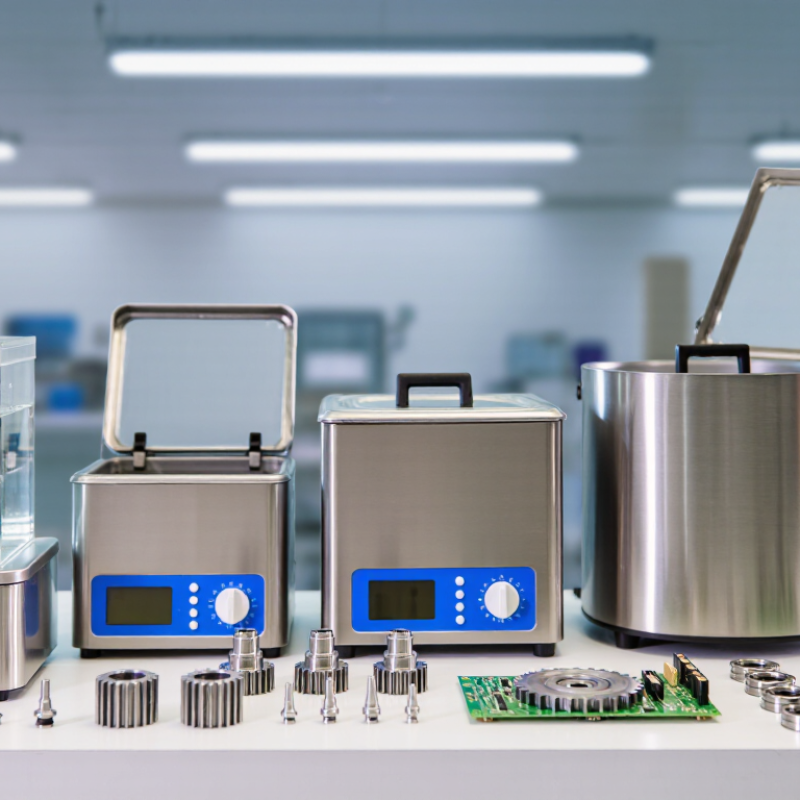
What Makes China a Leading Ultrasonic Cleaner Supplier for Global Buyers
China has become a leading ultrasonic cleaner supplier because it combines manufacturing depth, flexible production, and competitive pricing. Suppliers can source transducers, stainless-steel tanks, digital controls, and heating parts locally. This shortens production cycles and supports different buyer requirements. A Jewelry Cleaner Ultrasonic unit may need gentle vibration, stable temperature control, and a compact tank. Chinese manufacturers often adjust these details for workshops, laboratories, repair centers, and household users.
Professional suppliers also provide factory testing, sample approval, technical documents, and export support. Buyers should examine cleaning frequency, tank thickness, power stability, noise levels, and safety protection. Certifications matter, but documents alone do not prove dependable performance. Request test videos and inspect packaging before placing a large order. A low quotation can hide weaker components or limited after-sales support. Not every supplier offers the same engineering depth.
Tips: Compare at least three suppliers. Ask for a complete specification sheet. Confirm voltage and plug requirements early. Test a sample with your actual items. Check whether replacement parts remain available. Keep communication records. Small details matter. Some buyers focus too heavily on price and regret that decision later. A reliable supplier should explain limitations clearly, instead of promising perfect results for every cleaning task.
How Ultrasonic Cleaning Technology Works
How Ultrasonic Cleaning Technology Works
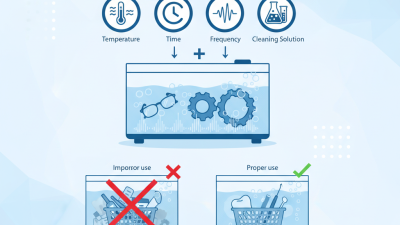
Ultrasonic cleaning uses high-frequency sound waves to create microscopic bubbles in a liquid. These bubbles rapidly collapse against surfaces. The action, called cavitation, loosens oil, dust, and fine particles from small gaps. It can reach areas that brushes often miss. A professional-grade tank usually combines controlled frequency, stable temperature, and timed cleaning cycles. Results depend on the object, solution, and contamination level.
Real cleaning is not perfectly uniform. Complex shapes may trap air, while heavy residue may need pre-cleaning. Lower temperatures can protect sensitive materials, but they may slow the process. Operators should inspect items before and after each cycle. This practical step improves reliability and prevents unrealistic expectations. For global buyers, clear operating instructions and consistent quality checks matter as much as equipment design.
Tips: Use a compatible cleaning solution. Never run the tank dry. Place items in a basket, not directly on the tank floor. Test one piece first, especially with plated surfaces, soft stones, glued parts, or delicate finishes. An Ultrasonic Jewelry Cleaner can remove everyday residue from suitable jewelry, but it cannot repair scratches or weakened settings. Keep the lid closed during operation, and replace cloudy solution when cleaning performance drops.
China Best Ultrasonic Cleaner Supplier for Global Buyers - How Ultrasonic Cleaning Technology Works
Note: The values shown are typical reference ranges for aqueous ultrasonic cleaning. Actual settings should be validated according to the workpiece material, contamination type, detergent, equipment configuration and required cleanliness level.
Types of Ultrasonic Cleaners Available from Chinese Suppliers
China Best Ultrasonic Cleaner Supplier for Global Buyers
Types of Ultrasonic Cleaners Available from Chinese Suppliers
Chinese suppliers offer several ultrasonic cleaner types for different production needs. Benchtop models suit repair shops, laboratories, jewelry workshops, and small parts cleaning. Their tanks often range from two to thirty liters. Compact controls make daily operation simple.
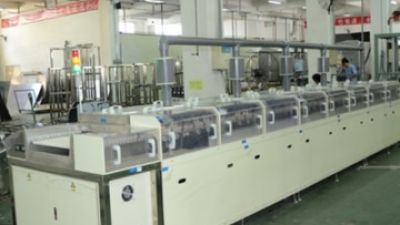
Industrial ultrasonic cleaners use larger tanks and stronger generators. They can include lifting platforms, filtration units, oil skimmers, and drying systems. Multi-tank lines combine washing, rinsing, and hot-air drying. This design supports repeatable factory workflows. However, floor space and energy use require careful planning.
Suppliers also provide cleaners with different frequencies. Low frequencies, such as 28 or 40 kHz, remove heavy oil and debris effectively. Higher frequencies create gentler cleaning for precision components and delicate surfaces. Heated models improve results when working with suitable aqueous solutions. Digital timers and adjustable power help operators control each batch.
From my experience, tank material matters. Stainless steel 304 works for many general applications, while 316 may suit more demanding environments. Ask for weld photos, generator specifications, noise data, and test cleaning videos. A sample test reveals more than a polished catalog. I once underestimated basket design; poor spacing reduced cleaning coverage and slowed production. Supplier communication can also be imperfect, especially when technical terms are translated loosely. Confirm voltage, drain position, ultrasonic power, warranty terms, and spare-part availability in writing.
Key Industries and Applications for Ultrasonic Cleaning Equipment
Ultrasonic cleaning equipment serves many industries, from precision engineering to medical device manufacturing. In workshops, cavitation reaches small holes, threaded areas, and narrow channels that brushes often miss. Automotive suppliers use it for injectors, valves, gears, and machined components. Electronics factories clean circuit assemblies, connectors, and precision tools after production. Optical companies also clean lenses, frames, and delicate instruments with controlled water-based solutions.
A suitable machine depends on the material, part geometry, contamination, and production volume. Stainless steel components may tolerate stronger cleaning conditions than aluminum or coated surfaces. Medical applications require documented procedures, compatible chemicals, and repeatable results. Aerospace buyers usually need process records, bath monitoring, and careful handling. From practical testing, cleaning time alone does not guarantee better results. Excessive temperature or power can damage sensitive parts. One mistake is assuming every component needs the same cycle. That approach often wastes energy and creates rework.
Tips: Test representative parts before purchase. Check tank size, basket load, frequency, heating control, and drainage design. Ask suppliers for sample-cleaning records and operating guidance. Measure cleanliness with a method suited to the application, such as visual inspection, particle analysis, or residue testing. Keep reviewing the process. Real production conditions may differ from laboratory trials.
How to Evaluate a China Ultrasonic Cleaner Manufacturer
Evaluating a China ultrasonic cleaner manufacturer starts with the machine, not the catalog. Ask about the cleaning challenge, workpiece material, dimensions, and production volume. A reliable supplier should recommend tank size, frequency, heating range, and usable power. Request a sample test with your actual parts. Inspect before-and-after photos, water temperature, cycle time, and residue results. Numbers matter. Vague promises do not.
Check whether the factory controls critical components and records each unit’s test results. Request wiring diagrams, operating manuals, calibration records, and inspection standards. Ask how welds, transducers, heaters, timers, and drainage systems are tested. Visit by video if travel is difficult. Look at assembly areas, spare-part storage, and finished-machine checks. One clean showroom proves little. I have seen attractive demonstrations hide unstable heating or weak documentation. That is an uncomfortable but useful warning.
Evaluate communication under pressure. Can the engineer explain cavitation, detergent compatibility, noise, and maintenance without avoiding details? Confirm packaging, lead time, warranty terms, replacement parts, and response times in writing. Verify applicable conformity documents for your destination market. Do not accept copied certificates without matching model numbers. A small pilot order is safer than a large commitment. Test repeatability across several cycles. If results vary, ask why. The answer may reveal more than the brochure.
Quality Standards, Customization, and Export Capabilities
Global buyers increasingly evaluate Chinese ultrasonic cleaner suppliers beyond price. Grand View Research valued the global ultrasonic cleaning market at approximately USD 1.8 billion in 2023. Its analysis also forecasts steady growth through 2030. That growth raises expectations for documented quality, not attractive photographs alone. Quality must be visible.
A reliable supplier should operate under ISO 9001 procedures and provide traceable inspection records. These may include tank welding checks, electrical safety tests, heating accuracy, ultrasonic power, and cavitation performance. Ultrasonic Cleaner Records should connect each machine to a serial number, test date, operator, and calibration result. CE, EMC, RoHS, or other documents may apply, depending on the destination market. Buyers should verify scope and validity. Paperwork can still be incomplete.
Customization should match the cleaning task, not merely enlarge the tank. Suppliers can adjust tank dimensions, 28 or 40 kHz frequencies, heater settings, degassing cycles, baskets, timers, and control interfaces. A 2024 MarketsandMarkets report identifies industrial cleaning demand as a major market driver, supporting this need for application-specific equipment. Export capability also matters. Experienced teams prepare multilingual manuals, strong export packaging, commercial invoices, packing lists, and compliant shipping labels. They should explain Incoterms and after-sales response times clearly. One weakness remains common: suppliers sometimes promise “custom solutions” before testing the customer’s parts. A small sample trial may expose noise, residue, or uneven cleaning that a quotation cannot show.
How to Choose the Right Ultrasonic Cleaner for Your Business
Choosing the right ultrasonic cleaner starts with the workpiece, not the advertised wattage. A 2024 Grand View Research report estimated the global ultrasonic cleaning market at about USD 2 billion. Market estimates vary, so treat them as direction, not proof. Your parts provide better evidence.
Measure the largest basket, including clearance around every surface. A tank that is too small encourages overloading and uneven cleaning. For delicate components, frequencies around 40 kHz are commonly used. Lower frequencies can create stronger cavitation, but may increase surface risk. Confirm temperature control, drainage, lid design, and adjustable power. A timer alone is not enough. Cleaning Ultrasonic Cleaner performance depends on chemistry, load spacing, temperature, and degassing time.
Ask for test records using your actual parts and soil. The U.S. FDA and CDC both emphasize validated cleaning procedures, suitable detergents, and thorough rinsing before further processing. Request data for cleaning time, temperature stability, noise, and electrical safety. Operators should see clear controls and repeatable settings. In practice, I would run three identical trials and inspect hidden holes under magnification. One trial can mislead. I have seen excellent-looking tanks fail when baskets touched the bottom. Supplier support also matters: obtain manuals, spare-part availability, calibration guidance, and written warranty terms. A cheaper unit may become expensive when every cycle needs manual correction.
Flat Glass Ultrasonic Cleaning Machine: A Complete Guide to Precision Cleaning and Production Efficiency
Flat glass ultrasonic cleaning machines are increasingly important as manufacturers pursue higher optical quality, tighter tolerances, and greater production efficiency. The International Energy Agency reported that global solar photovoltaic capacity surpassed 1,400 GW in 2023, increasing demand for reliable glass-processing and surface-preparation equipment. At the same time, advanced display, optical, and touch-screen components require cleaning systems capable of removing microscopic particles, fingerprints, polishing residues, and organic contaminants without scratching delicate surfaces.
A typical PTN-500-AS flat glass cleaning machine combines ultrasonic cleaning with controlled rinsing, drying, and conveying processes. Ultrasonic waves create microscopic bubbles in the cleaning solution; their collapse generates localized energy that reaches edges, recesses, and fine surface structures more consistently than manual or purely mechanical methods. This makes the system suitable for surface glass, optical glass, mobile phone glass, and touch-screen glass. Automated handling also improves repeatability, reduces labor dependence, and limits recontamination between processing stages. Industry 4.0 research from the International Federation of Robotics highlights the continuing expansion of automation in manufacturing, supporting the shift toward programmable and traceable cleaning lines.
For precision production, key selection criteria include conveyor speed, usable glass dimensions, bath temperature stability, filtration accuracy, ultrasonic frequency, and drying uniformity. A well-configured system can help reduce reject rates caused by water marks, dust, and residual particles while maintaining continuous throughput. In high-cleanliness applications, integration with filtered air, multi-stage rinsing, and process monitoring enables manufacturers to match cleaning performance with increasingly demanding quality-control standards.
FAQS
High-frequency sound waves create microscopic bubbles in liquid. These bubbles collapse against surfaces and loosen oil, dust, and fine particles. This process is called cavitation. It reaches narrow gaps that brushes may miss.
No. Results depend on the material, object shape, solution, and contamination level. Complex shapes may trap air. Heavy residue may require pre-cleaning. Real cleaning is not perfectly uniform.
Frequency, temperature, cleaning time, and ultrasonic power all matter. Common frequencies include 28 and 40 kHz. Lower temperatures may protect sensitive materials but slow cleaning. More time is not always better.
Put items in a basket, never directly on the tank floor. Keep the lid closed during operation. Do not run the tank dry. These small habits prevent avoidable damage.
It can, especially with plated surfaces, soft stones, glued parts, loose settings, or delicate finishes. Test one piece first. Inspect it before and after cleaning. The process removes residue, not scratches.
Replace cloudy solution when cleaning performance drops. Use a solution compatible with the object and material. A dirty liquid can reduce results. The tank needs attention, too.
Useful records connect each machine to a serial number, test date, operator, and calibration result. They may cover welding, electrical safety, heating accuracy, ultrasonic power, and cavitation performance. Paperwork can still be incomplete, so verify its scope and validity.
Ask for a sample trial using the actual parts. Check noise, residue, cleaning uniformity, and cycle time. A larger tank is not automatically a better solution. Promises sometimes arrive before testing, which deserves careful reflection.
Clear manuals, protective packaging, invoices, packing lists, and compliant shipping labels are important. The supplier should explain delivery terms and after-sales response times. Details matter. A good-looking machine is only part of the purchase.
Conclusion
China has become a leading source of ultrasonic cleaning equipment because its manufacturers offer broad product choices, competitive pricing, flexible production, and strong export experience. An Ultrasonic Cleaner uses high-frequency sound waves to create microscopic bubbles in a cleaning solution. When these bubbles collapse, they generate gentle but powerful energy that removes dirt, oil, dust, and residue from complex surfaces and hard-to-reach areas. Chinese suppliers can provide tabletop, industrial, multi-tank, automated, and customized systems for applications in manufacturing, electronics, automotive, medical equipment, jewelry, laboratories, and precision parts processing.
When evaluating a China Ultrasonic Cleaner manufacturer, buyers should consider production capability, material quality, testing procedures, safety features, certifications, customization services, after-sales support, packaging, and international shipping experience. The right machine depends on the item size, cleaning solution, contamination type, required capacity, operating frequency, heating needs, automation level, and available budget. Careful comparison and clear communication can help businesses select reliable equipment that delivers consistent cleaning performance and long-term value.