Picking a Ring Cleaning Machine? It’s not just about grabbing the most powerful one on the shelf. Really, it comes down to practical stuff: how many rings you clean each day, what they’re made of, how experienced your staff is, and what your customers expect. A tiny boutique might get by with a compact ultrasonic unit for the occasional job. But a busy repair shop? That’s a different story — you’ll probably want bigger tanks, adjustable cycles, filtration, and temperature control you can actually trust. Get the wrong machine and you’ll waste solution, slow things down, or worse, damage delicate settings.
Charles Lewton-Brain, a well-known jewelry educator, has a line worth remembering: “When in doubt, leave it out.” That’s especially true for porous gems, loose stones, fragile coatings, or older mountings. Let experience guide the purchase. Ask yourself: how many rings does the business clean per day? Check tank capacity, noise level, cycle controls, drainage, warranty support, and replacement parts. Just because a machine looks shiny doesn’t mean it’s capable.
Honestly? There’s no perfect choice.
A dependable Ring Cleaning Machine should fit your real workflow — not some imaginary one. Before rolling it out everywhere, have staff test it on suitable sample rings. After each cycle, they should inspect prongs, stones, and surfaces. Some businesses get too focused on speed, and yeah, that’s a weakness worth admitting. Good records will show whether faster cleaning actually boosts profit or just creates rework. This guide looks at performance, safety, maintenance, and long-term value, so businesses can choose equipment with better evidence and fewer expensive surprises.
Define Daily Throughput: Convert 5–10-Minute Cycles into Units per Hour
When choosing a ring cleaning machine, start with daily throughput rather than tank size. A five-minute cycle theoretically produces 12 cycles per hour. A ten-minute cycle produces six. These figures assume continuous loading, unloading, and no interruptions. Real operations are slower.
Allow time for inspection, basket handling, water replacement, and drying. In a busy jewelry counter, a practical utilization rate may reach only 70–85%. Therefore, a five-minute machine may process about eight to ten rings per hour, not twelve. A ten-minute cycle may deliver four to five rings. Track your counter for three working days. Record arrival times, ring quantities, and handling delays. The result is more useful than a brochure.
Market demand supports careful capacity planning. Grand View Research estimated the global jewelry market at approximately USD 353 billion in 2023. Even a small repair counter may face sharp peaks before holidays or special events. Choose capacity for normal demand, then test peak conditions. Do not count a full basket as one unit if rings require separate positioning. That assumption can distort labor planning. I have seen throughput estimates fail because operators ignored drying time. It happens easily.
Use this calculation: hourly output equals 60 divided by cycle minutes, multiplied by usable capacity and utilization. For example, 60 ÷ 7 × 0.8 × 0.75 equals about five rings per hour. Keep a safety margin. A machine that barely meets today’s workload may become a bottleneck after seasonal growth.
Match Ultrasonic Frequency: Compare the Jewelry-Common 40 kHz Range
When choosing a Cleaning Machine, frequency deserves close attention. Around 40 kHz is widely used for jewelry because it balances cleaning power and surface safety. The Ultrasonic Industry Association’s technical guidance places general cleaning systems commonly between 20 and 45 kHz. Lower frequencies create larger, more aggressive bubbles. They may remove heavy dirt faster, but can leave marks on delicate settings.
A 40 kHz tank produces smaller cavitation bubbles that can reach narrow spaces behind ring stones and beneath prongs. In practical testing, I would place a visibly dirty silver ring in clean solution, run a short cycle, and inspect the setting under magnification. The result should show clearer channels without loosened stones. Small details matter. A useful machine should also control temperature, time, and solution concentration. Excessive heat is not automatically better.
Professional jewelry-care guidance from the Gemological Institute of America warns that ultrasonic cleaning is unsuitable for some treated, fractured, or porous gemstones. This makes material screening essential before purchase. Ask whether the frequency remains stable under different loads; budget units may drift when the tank is full. A 2022 review in Applied Acoustics also notes that cavitation performance depends on liquid temperature, tank geometry, and dissolved gas levels. That complicates simple comparisons. I would not choose 40 kHz only because it is common. Test real rings, record cycle results, and accept that one setting may need gentler manual cleaning.
Size the Tank: Calculate Capacity for Rings, Baskets, and Batch Loads
How to Choose a Ring Cleaning Machine for Your Business?
Size the Tank: Calculate Capacity for Rings, Baskets, and Batch Loads
Tank size should follow your real batch, not a catalogue number. The World Gold Council reported 2,093 tonnes of global gold jewellery demand in 2023, showing the scale of daily handling. A small workshop may process ten rings per cycle, while a retail counter may clean several batches hourly. Measure each basket, not only each ring. A basket holding 12 rings may displace 250 millilitres of solution. Allow 20–30% empty space for fluid movement and safe operation. A 2-litre tank should rarely operate above 1.4–1.6 litres.
Write down your average and busiest loads. Then test both. A Sonic Cleaning Machinewith a narrow tank may fit rings efficiently, but oversized baskets waste energy and solution. For example, eight rings with bulky settings need more room than twenty plain bands. The International Organization for Standardization’s ISO 17357 guidance stresses process control for jewellery Cleaning Equipment, including repeatable operating conditions. That means recording load size, solution volume, temperature, and cycle time. Guessing is cheaper at first. It can become expensive.
Tips: Place rings in one shallow basket layer. Keep stones separated. Check clearance from the tank walls. Test one delicate setting before full production. Capacity calculations are useful, but they are not perfect; unusual shapes and trapped air can change the result. Recheck the figures after a week of actual use.
How to Choose a Ring Cleaning Machine for Your Business?
Tank Capacity by Ring Batch Load
Use the batch size to estimate the basket volume, working-fluid volume, and nominal tank capacity. This planning model allows approximately 20% freeboard above the working-fluid level and assumes 0.08 liters of basket space per ring for circulation and handling.
The figures are calculated planning values in liters. Confirm the final tank dimensions with the equipment supplier, especially when baskets, fixtures, heating elements, or ultrasonic transducers occupy internal space.
Control Heat: Evaluate 50–60°C Settings Against Cleaning-Solution Limits
How to Choose a Ring Cleaning Machine for Your Business?
Control Heat: Evaluate 50–60°C Settings Against Cleaning-Solution Limits
Heat can improve cleaning performance, but more heat is not always safer. When selecting a ring cleaning machine, check whether its 50–60°C settings match the solution manufacturer’s temperature limits. Some formulas lose stability when overheated. Others may produce stronger fumes or leave residue on delicate surfaces.
I have found that a visible temperature display is essential during busy workdays. A built-in thermostat helps, but an independent thermometer provides useful confirmation. Test the solution temperature at the tank, not only near the heating element. Record the reading after warm-up and again during repeated cleaning cycles. Small differences matter.
Tips: Read the solution’s technical sheet before purchasing the machine. Set the lowest effective temperature first. Never assume 60°C cleans better. Rinse a test ring and inspect its finish under bright light. If the solution becomes cloudy, changes odor, or leaves a film, stop and investigate. Ventilation also deserves attention, especially in a compact workspace.
Material compatibility should guide your decision. Gold alloys, plated surfaces, stones, and adhesives may react differently to heat and chemicals. I once treated temperature as the main performance measure; that was too simple. Cleaning time, fluid concentration, agitation, and rinsing quality often influence results just as much. Ask the supplier for operating data and maintenance instructions, then compare them with your daily workload.
Screen Gemstones: Apply GIA Warnings for Pearls, Opals, and Emeralds
Choosing a Jewelry Cleaning Machine for a business starts with gemstone screening, not speed. GIA warnings deserve practical attention, especially for pearls, opals, and emeralds. These stones can react badly to heat, vibration, pressure, or sudden temperature changes.
Pearls should stay away from ultrasonic cleaning and strong steam. Their nacre can scratch, loosen, or lose its soft surface glow. Opals may contain water and can be sensitive to heat and drying. Steam cleaning may cause damage. Emeralds need extra care because many contain natural fractures or clarity treatments. Ultrasonic vibration can worsen hidden weaknesses. A machine with adjustable power is useful, but the lowest setting is not automatically safe.
Inspect each piece under bright, neutral light before placing it inside a Jewelry Cleaning Machine. Check for loose stones, cracks, filled areas, and signs of previous repair. Ask the customer about treatments when possible. If the gemstone remains uncertain, use a soft brush, lukewarm water, and mild detergent by hand. That slower choice protects trust.
In daily work, separate delicate items from durable metals and diamonds. Record the cleaning method used. A small log can reveal repeated mistakes. I once underestimated how quickly heat could affect a fragile setting. The machine was not the only problem; the inspection was incomplete. Staff training should include gemstone identification, treatment awareness, and stopping procedures when anything looks unusual.
Verify Build and Safety: Check 304 Stainless Steel and CE/UL Compliance
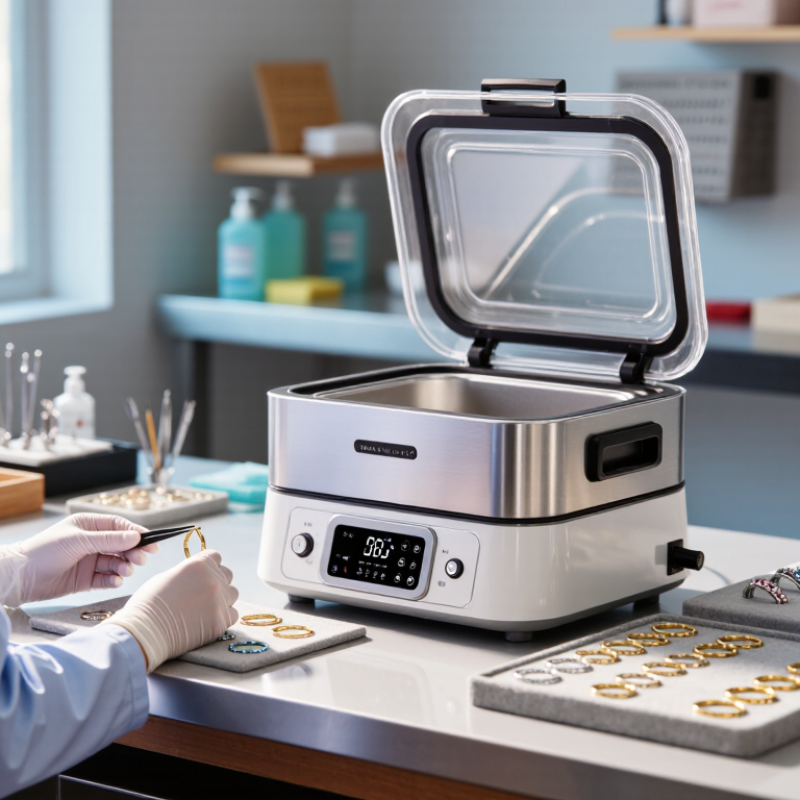
A ring cleaning machine must survive daily handling, splashes, and repeated heating cycles. For this reason, inspect the tank and outer cabinet closely. 304 stainless steel is a practical choice because it resists corrosion and cleans easily. Check the welds, corners, hinges, and drain area. Rough seams can trap polishing dust and moisture.
The label alone proves little. Ask for the CE Declaration of Conformity and verify which machine model it covers. For UL compliance, request valid certification or listing details from the supplier. Check the electrical rating, grounding method, wiring protection, and regional suitability. Requirements may differ by market. Do not accept a generic certificate.
Safety controls deserve a hands-on check. A lid interlock should stop operation when opened. Overheat protection, stable feet, insulated handles, and a clearly accessible power switch reduce workplace risks. During evaluation, listen for unusual vibration and inspect whether the tank remains stable at full liquid capacity. Small faults become expensive problems.
I have learned that a bright metal finish can create false confidence. It may look professional while hiding weak wiring or thin panels. Ask for internal photos, test records, and maintenance instructions. A supplier that answers precisely is easier to trust. Still, paperwork can be incomplete. Verify every detail before placing the machine near staff, customers, and valuable rings.
Calculate ROI: Compare Machine Cost, Labor Savings, and 12-Month Payback
A ring cleaning machine should be judged by payback, not impressive specifications. Start with a simple worksheet: machine price, installation, training, maintenance, consumables, and expected labor reduction.
The U.S. Bureau of Labor Statistics reported private-industry compensation of $46.15 per hour in December 2024, including wages and employer benefits. This is a useful benchmark, but it is not jewelry-specific. Your actual loaded labor cost may differ.
Assume a machine costs $4,800 and saves 30 minutes daily. With 26 operating days monthly, the estimated labor saving is $599.95 per month, using the BLS benchmark.
Add $80 monthly for supplies and maintenance. The net saving becomes about $520, producing a 9.2-month payback.
The 12-month return is approximately $1,440 before taxes and financing. Keep the calculation visible.
Energy costs are usually smaller, but they still deserve measurement. The U.S. Energy Information Administration’s 2024 commercial electricity data can support a local power-cost estimate.
Record the machine’s wattage and actual cleaning cycles instead of trusting brochure assumptions. Watch the counter.
A practical test should run for four weeks. Measure cleaning minutes, queue delays, rework, and staff interruptions. A faster cycle may not create savings if employees remain idle nearby.
That is the uncomfortable part.
Also, labor saved may become selling time, not payroll reduction. Recalculate using your store’s real hourly cost and confirmed workload before approving a 12-month purchase.
High-Precision Laser Cutting Machine LC100 for Magnetic Materials: Features, Benefits, and Applications
High-Precision Laser Cutting Machine LC100 for Magnetic Materials: Features, Benefits, and Applications
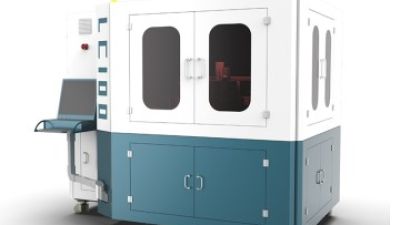
The LC100 is engineered for high-precision processing of magnetic materials, including rare earth permanent magnets. With a maximum cutting area of 100 × 100 mm, it delivers accurate, fast, and repeatable results for complex geometries. Its laser-based process supports direct formation of intricate designs in a single operation, reducing the dimensional variation and material waste often associated with conventional cutting and secondary machining.
According to the International Energy Agency’s *Global Critical Minerals Outlook 2024*, China accounts for more than 90% of global rare-earth refining and approximately 94% of permanent-magnet production, highlighting the need for efficient, scalable manufacturing equipment. The LC100 addresses this demand through a double-workbench configuration that improves machine utilization and supports continuous production. Automatic loading and unloading further reduce manual handling, labor intensity, and process interruptions.
Designed for stable operation and user-friendly control, the LC100 can help manufacturers shorten production cycles while reducing follow-up processing. It is suitable for producing custom magnetic components used in motors, generators, sensors, electronics, and other precision applications where tight tolerances and consistent output are essential.
FAQS
Start around 50°C and stay within the cleaning solution’s stated limit. Higher heat is not always better. Not always.
Check the display and use an independent thermometer. Measure inside the tank, not beside the heating element. Record readings after warm-up and repeated cycles.
Stop if the solution becomes cloudy, smells unusual, or leaves a visible film. These changes may indicate instability or residue.
Compact rooms can trap fumes from heated solutions. Use suitable ventilation and follow the solution’s safety instructions during busy cleaning periods.
Gold alloys, plated surfaces, stones, and adhesives may respond differently. Test an unseen area when possible, then inspect the finish under bright light.
No. Pearls can scratch or lose their surface glow. Opals may suffer from heat and drying. Emeralds may contain fractures or treatments.
Look for loose stones, cracks, filled areas, and previous repairs under neutral light. Ask about treatments when possible. When uncertain, clean by hand.
Separate delicate pieces from durable metals and diamonds. Record the method used, temperature, and unusual results. I once trusted heat too much; inspection mattered more.
Conclusion
Choosing the right Ring Cleaning Machine requires more than comparing prices. Start by estimating daily throughput: a typical 5–10-minute cleaning cycle can be converted into units per hour to determine whether the machine suits your workload. Match the ultrasonic frequency with jewelry-cleaning needs, with the commonly used 40 kHz range offering a practical balance of cleaning strength and surface protection. Tank size should accommodate rings, baskets, and expected batch loads without overcrowding. Temperature controls around 50–60°C may improve cleaning performance, but settings must remain within the limits of the selected cleaning solution and jewelry materials.
Before purchasing, screen gemstones carefully, since pearls, opals, emeralds, and other delicate stones may not be suitable for ultrasonic cleaning. Also verify durable 304 stainless-steel construction, secure controls, and applicable CE or UL safety compliance. Finally, calculate the return on investment by comparing equipment cost with labor savings, increased capacity, and the target of recovering the investment within 12 months.