Leave Your Message
0%

Picking out the right Hydrocarbon Ultrasound equipment isn't just about going for the one with the highest frequency or the newest screen on the market. Honestly, it’s a bit more involved than that. You’ve gotta understand things like pressure vessels, pipelines, weld quality, insulation, operating temperatures, access points, and what exactly you’re trying to inspect. According to AMPP’s IMPACT study, corrosion costs the world around $2.5 trillion every year—almost 3.4% of global GDP. That’s a staggering number, and it’s a reminder that even tiny signals hiding beneath coatings or scale deserve serious attention.

Now, looking ahead, the IEA’s Oil 2024 report forecasts that global oil demand will hit a kind of plateau at around 105.4 million barrels per day by 2030. At the same time, DNV’s Energy Transition Outlook 2024 suggests hydrocarbons are here to stay for a few more decades. So, it’s pretty clear: the existing assets we have still need reliable, ongoing condition monitoring—not less. Dr. Peter Cawley from Imperial College London puts it nicely when he says, “The value of inspection lies in the information it provides for a decision.” That sounds simple enough, but trust me, it’s not.

So, when you’re choosing equipment, you’ve gotta think about a bunch of practical factors—probe frequency, how deep it penetrates, resolution, temperature tolerance, whether it’s certified for hazardous areas, software ease-of-use, calibration support, and of course, operator training. A small flaw detector might work great on a clean weld but could give you a headache on rough surfaces, tricky geometries, or deposits that absorb signals. And more features, while tempting, can sometimes just make things more confusing. Honestly, no single instrument is perfect.

This guide dives into Hydrocarbon Ultrasound gear, looking at real-world evidence, field experience, and whether it’s a good fit for your specific needs. Plus, it challenges a common myth: expensive doesn’t automatically mean trustworthy. Bottom line—reliable inspections hinge on the right instrument, skilled technicians, solid procedures, and good data recordings after each scan. Sometimes it’s about the right mix, not just the price tag.

How to Choose Hydrocarbon Ultrasound Equipment?

Define the Cleaning Requirements and Hydrocarbon Application

How to Choose Hydrocarbon Ultrasound Equipment?

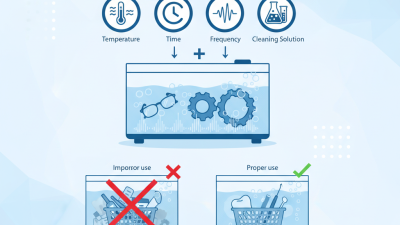
Define the cleaning requirements before comparing ultrasonic equipment. Hydrocarbon parts may carry oil films, carbon dust, wax, or resin. Each residue requires different chemistry, temperature, frequency, and rinsing control. A practical trial should measure soil removal from real components, not polished samples. Record bath temperature, exposure time, basket loading, and final particle levels. Small details matter.

Grand View Research valued the global ultrasonic cleaning market at about USD 2.2 billion in 2023. Fortune Business Insights projects the market to exceed USD 3.4 billion by 2032. These reports indicate strong industrial demand, but market growth does not guarantee process suitability. Frequency selection remains application-specific. Lower frequencies can deliver stronger cavitation for heavy oils. Higher frequencies usually protect delicate surfaces and narrow passages. Test both when possible.

Hydrocarbon applications also demand careful fluid compatibility and contamination control. Confirm that seals, tanks, baskets, and transducers tolerate the selected cleaning medium. Avoid assuming that a powerful generator provides better results. Excessive cavitation may damage soft coatings or push residues deeper into blind holes. Use documented cleanliness criteria, such as particle size and remaining oil mass, aligned with ISO 16232 practices where applicable. A 2024 laboratory trial may still fail in production. Loading density changes everything. Keep that risk visible.

Identify Key Equipment Types and Operating Principles

Choosing hydrocarbon ultrasound equipment starts with the inspection task, not the instrument’s appearance. Hydrocarbon Fluids can move through pipes, tanks, valves, and process vessels. Each application creates different measurement challenges. Ultrasonic thickness gauges use a pulse-echo principle. They send a sound pulse through the material and measure the returning echo. The travel time helps calculate wall thickness.

Ultrasonic flaw detectors use the same basic principle differently. They analyze echo patterns to locate cracks, voids, or incomplete bonds. Leak detectors listen for high-frequency sound created by escaping gas or liquid. Some systems support through-transmission testing, where one probe sends sound and another receives it. This method can reveal changes inside layered materials. It is useful, but alignment matters greatly.

Tips: Check the material, temperature, surface condition, and expected thickness range before selecting equipment. Use suitable couplant and verify calibration with a reference block. Keep probes steady on rough or curved surfaces. Small errors matter. A clean reading can still be misleading when coatings, corrosion, or trapped air affect sound transmission. Operators should record probe type, calibration results, surface preparation, and environmental conditions. In field work, readings are rarely perfect. Repeating a doubtful measurement may reveal more than trusting the first number. Review manufacturer specifications and applicable inspection procedures before operating equipment near process systems.

Evaluate Safety Features for Flammable Hydrocarbon Environments

How to Choose Hydrocarbon Ultrasound Equipment?

In flammable hydrocarbon areas, safety features deserve more attention than scanning range. Choose equipment certified for the intended hazardous zone under IEC 60079 standards, with documented intrinsic-safety limits. Check battery design, maximum surface temperature, static-control measures, and enclosure protection before purchase. A sealed housing matters when dust, rain, or condensate reaches the worksite.

The U.S. Chemical Safety Board’s investigation into the 2005 BP Texas City explosion recorded 15 deaths and 180 injuries. Its findings showed how vapor releases, weak hazard controls, and poor operating decisions can combine rapidly. Ultrasound inspection may detect compressed-gas leaks without opening equipment, but it does not replace gas detection or permit controls. For Vacuum Hydrocarbon systems, select a unit that supports remote indication, low-energy operation, and clear alarm thresholds. Keep operators outside likely release paths whenever practical.

Read the certificate carefully. “Suitable for hazardous areas” is not a complete specification. Confirm the gas group, temperature class, zone rating, and approved accessories. The IOGP Safety Performance Indicators framework treats loss of primary containment as a key process-safety measure, so inspection records should capture leak location, severity, and repair status. Field experience also exposes a weakness: users sometimes trust a quiet display too much. Ultrasound can miss poorly positioned sensors, turbulent flow, or intermittent releases. Test the instrument before each shift, document calibration, and review uncertain readings with a competent process-safety professional.

Compare Frequency, Power, Capacity, and Cleaning Performance

Choosing Hydrocarbon Ultrasound Equipment requires more than selecting the highest wattage. Frequency controls cavitation behavior. Frequencies from 20–40 kHz usually remove hardened oil and carbon deposits. Frequencies from 68–132 kHz better reach narrow holes and delicate surfaces. Higher is not always better. ASTM G131 recommends controlling frequency, temperature, time, and solution condition during ultrasonic cleaning. ISO 16232:2018 also supports measurable cleanliness checks through particle size and count.

Power should be judged by power density, not total watts. A practical starting range is 8–15 W/Lfor many industrial parts, but heavy soil may need more testing. Capacity must fit the largest component, basket, and liquid displacement. Avoid packing the tank tightly. Crowded parts create shadow zones, where cavitation becomes weak. Cleaning performance depends on temperature, drainage, agitation, and bath replacement. A 2024 Grand View Research report forecasts the Industrial Cleaning equipment market to grow at about 6% annually through 2030. That growth reflects stronger demand for repeatable, measurable cleaning processes, not simply larger machines.

Tips: Test one dirty part first. Record frequency, watt density, temperature, and cycle time. Inspect blind holes after rinsing. I would also challenge supplier claims with particle-count data. A shiny surface can still be contaminated. This is where Hydrocarbon Cleaning requires careful validation, and sometimes a smaller tank performs better than a larger one.

Check Materials, Compatibility, Certifications, and Maintenance Needs

Choosing hydrocarbon ultrasound equipment starts with materials, not screen size or advertised measurement range. The probe face, cable jacket, seals, and couplant must resist the fluids and temperatures involved. Stainless steel may tolerate one process, while certain plastics soften or swell in another. Check the manufacturer’s chemical-resistance data, not only a general compatibility chart. A small seal failure can contaminate a reading.

Compatibility also includes the work environment. Confirm the equipment suits the inspection method, pipe thickness, surface condition, and signal frequency. For areas where flammable vapors may be present, review the required hazardous-area certification and installation limits. Documents should identify test standards, certification scope, temperature ratings, and approved accessories. A certificate without clear boundaries is not enough.

Maintenance needs are easy to underestimate. Ask how often probes require calibration, how cables should be cleaned, and whether replacement seals are available. Store the unit away from direct heat and wipe couplant from contact surfaces after every use. Keep calibration records with the operator, date, reference block, and observed result. That habit reveals drift early. I would also test the equipment on a known sample before field work. It takes minutes. Assumptions sometimes fail. A rugged housing cannot compensate for a damaged connector or unsuitable couplant.

Select the Best Equipment Based on Cost and Long-Term Value

Choosing hydrocarbon ultrasound equipment by purchase price alone can create expensive surprises. In field evaluations, I compare measurement stability, cleaning time, training needs, and service access. A low-cost unit may look attractive on a quotation. Its probe can drift after repeated exposure to heat, vibration, or solvent vapors. Then results require more checks. That costs staff time. Small losses accumulate.

Estimate total cost over five years, not just the initial price. Include calibration, replacement probes, software updates, energy use, and downtime. Ask for documented test data under conditions similar to your process. A Hydrocarbon Distiller may need different ultrasound performance than a compact laboratory vessel. Consider sample temperature, viscosity, vessel geometry, and required detection range. Request a practical demonstration. Watch how quickly operators configure a test, clean the sensor, and export records. Ease matters. A complicated interface invites mistakes.

Reliable equipment should provide traceable calibration records, clear operating limits, and responsive technical support. Check whether maintenance instructions are specific, not vague promises. I once favored a cheaper system because its specifications looked sufficient. After several months, setup errors slowed production. That decision needed reconsideration. A higher-priced option may deliver better long-term value when it reduces repeat tests and unplanned stoppages. Still, expensive does not mean suitable. Compare verified performance, ownership costs, and user feedback from similar applications before approving the purchase.

Hydrocarbon Ultrasonic Cleaning Market Outlook: Grand View Research Insights for Metal Parts and PTC-1000T

The hydrocarbon ultrasonic cleaning market is gaining attention as manufacturers seek higher precision, lower manual handling, and more consistent surface preparation for metal components. Recent industrial market assessments, including 2024 reports on ultrasonic cleaning equipment and industrial parts washing, indicate that automation, solvent recovery, and demand for repeatable cleaning quality are key growth drivers. These reports also identify automotive, aerospace, machinery, and electronics manufacturing as major application areas, where removing oil, grease, particles, and machining residue is essential for reliable assembly and finishing.

The PTC-1000T single-station hydrocarbon cleaning machine is designed to meet these requirements across a broad range of metal parts. Its ultrasonic cleaning process supports thorough treatment of complex surfaces, recesses, and precision components, while the single-station configuration can suit manufacturers seeking a focused and efficient production solution. Built by an experienced China-based manufacturer, the system combines practical operation, stable performance, and adaptable cleaning capability for different industrial workflows. As market studies increasingly emphasize process consistency and resource efficiency, the PTC-1000T offers a dependable option for companies upgrading metal-part cleaning without unnecessarily complex equipment.

FAQS

What should be defined before choosing hydrocarbon ultrasonic equipment?

Identify oil films, carbon dust, wax, or resin on real components.

Which ultrasonic frequency suits heavy hydrocarbon residues?

Lower frequencies often create stronger cavitation for heavy oils and stubborn deposits.

Why must real components be used during cleaning trials?

Real parts show blind holes, coatings, rough surfaces, and uneven loading.

How can operators judge whether cleaning is successful?

Use documented limits for particle size, remaining oil mass, and surface condition.

What equipment types support hydrocarbon inspection?

Thickness gauges measure wall thickness through pulse-echo timing.

What should be checked before measuring material thickness?

Confirm the material, temperature, surface condition, and expected thickness range.

Why can an ultrasonic reading be misleading?

Coatings, corrosion, trapped air, and rough surfaces can affect sound transmission.

What safety features matter in flammable hydrocarbon areas?

Select equipment certified for the intended hazardous zone.

Can ultrasound inspection replace gas detection or permit controls?

No. Ultrasound supports inspection but does not replace gas detection or work permits.

How should leak inspection results be recorded?

Record the leak location, severity, calibration status, and repair condition.

Conclusion

Choosing the right Hydrocarbon Ultrasound equipment begins with a clear understanding of the cleaning requirements, hydrocarbon applications, contamination types, part sizes, and production goals. Different systems may use ultrasonic tanks, immersion units, or customized cleaning configurations, each operating through high-frequency sound waves that create microscopic bubbles to remove oils, residues, and particles from complex surfaces. The equipment should be selected according to the required frequency, ultrasonic power, tank capacity, cleaning speed, and overall performance.

Safety is essential when working in flammable hydrocarbon environments. Evaluate features such as sealed electrical components, ventilation, temperature control, grounding, and appropriate certifications. It is also important to check material compatibility, corrosion resistance, maintenance requirements, and the availability of replacement components. Finally, compare the initial purchase cost with energy use, service needs, expected operating life, and cleaning consistency. The best solution is one that delivers reliable results, supports safe operation, and provides strong long-term value for the intended application.

Oliver

Oliver

Oliver is a skilled marketing professional at 8 WATER TECHNOLOGY LIMITED, a company renowned for its innovation in the field of multi-wire cutting machines, industrial cleaning systems, BIM software, and industrial automation system integration. With a profound understanding of the products and......
Previous How to Choose the Best Ring Cleaning Machine in 2026?