- Home
- About Us
- Products
- Solution
- Custom Service
- Contact Us
- Blog
Leave Your Message
Picking the right Grinding Wheel isn't just about finding one that fits your machine's diameter. You've also got to think about the material, the finish you want, the speed, and the pressure you'll be using. A wheel that slices through steel like butter might clog up fast on aluminum. And another one? It can leave burn marks if you push it too hard. Honestly, those little differences can make a big difference.
Dr. Jeffrey A. Badger, the founder of The Grinding Doc, puts it pretty simply: “A Grinding Wheel is a cutting tool, not a magic eraser.” And honestly, that one line kind of changes the way buyers look at products. You’ve got abrasive type, grit size, bond, grade, structure—they all play a role in performance. The machine’s horsepower matters too. And so does how the operator actually uses the thing.
So, this guide — “7 Tips for Buying the Right Grinding Wheel” — is all about the stuff you can actually check before you buy. Things like how hard your workpiece is, what kind of surface finish you need, wheel speed, and whether you'll need to dress it. It also gets into why safety labels and manufacturer specs aren't just there for decoration, you know? Because a wheel can look perfectly fine sitting on a shelf... and then totally let you down once it's under real pressure.
Honestly, this process is almost never perfect. You'll get buyers who pick a finer grit because they want a nicer finish—and then, boom, production slows way down. Others go for a harder wheel, thinking it'll last longer, but instead they end up creating too much heat. It's an easy mistake to make. And yeah, it can get expensive, too.
Companies you can trust—Norton, 3M, Tyrolit, for example—do put out technical guides for their abrasives. But honestly? Spec sheets alone won't get you all the way there. You've still got to test things carefully. Begin with what you're actually trying to do. Watch the sparks, listen to the sound, check the temperature, and look at the finish. Then tweak based on what you're seeing—not on a hunch.
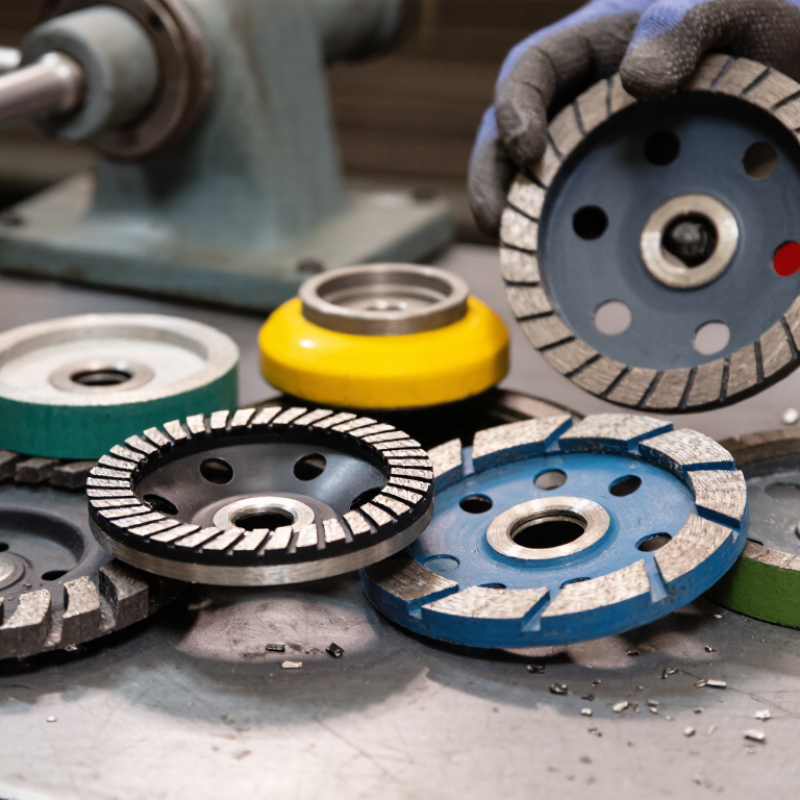
Choosing a grinding wheel starts with the workpiece, not the wheel’s color or price. Steel usually suits aluminum oxide, while cast iron, stone, glass, and many nonferrous metals often require a Silicon Carbide Grinding Wheel. Stainless steel needs careful selection because excessive heat can discolor its surface and damage its corrosion resistance. Watch the sparks. Bright, branching sparks often indicate carbon steel; fewer sparks may suggest stainless steel or nonferrous metal.
Define the task before selecting grit and hardness. Use coarse grit for rapid stock removal, medium grit for shaping, and fine grit for finishing. A soft wheel can cut cooler, but it wears faster. A hard wheel lasts longer, yet it may load or glaze during heavy grinding. OSHA sets respirable crystalline silica exposure at 50 μg/m³ over an eight-hour shift, with a 25 μg/m³ action level. Dust control still matters when grinding stone or ceramics. Keep the wheel guard fitted, check its maximum RPM, and never force a loaded wheel into the workpiece. I have seen operators choose grit correctly but ignore wheel speed. That mistake is easy to repeat. A simple test helps: make a light pass on scrap, inspect the surface, and check for blue heat marks, chatter, or glazing before continuing.
| Tip | Decision Factor | Material or Task | Typical Wheel Choice | Buying and Use Guidance |
|---|---|---|---|---|
| 1 | Identify the workpiece material | Carbon steel and general ferrous metals | Aluminum oxide abrasive; resin or vitrified bond depending on the operation | Aluminum oxide is commonly used for steels. Confirm that the wheel is rated for the specific metal and application before use. |
| 2 | Match the abrasive to the material | Stainless steel and heat-sensitive alloys | A wheel specifically designated for stainless steel, often with an aluminum oxide or blended abrasive | Choose a formulation intended to reduce contamination and loading. Use moderate pressure and avoid overheating the workpiece. |
| 3 | Check compatibility with non-ferrous materials | Aluminum, brass, copper, and other non-ferrous metals | A wheel labeled for non-ferrous metals; Silicon Carbide is commonly used for many non-ferrous applications | Non-ferrous metals can load or clog unsuitable wheels. Follow the wheel maker’s material recommendation and do not use a wheel that is not approved for the task. |
| 4 | Define the grinding operation | Cutting, stock removal, deburring, surface grinding, or sharpening | Thin cutting-off wheel for cutting; thicker reinforced wheel for off-hand grinding; dedicated wheel for precision sharpening | Never use a cutting-off wheel for side grinding unless it is specifically designed and marked for that purpose. Select the wheel profile for the intended contact direction. |
| 5 | Select the grit size | Removal rate versus surface finish | Coarse: 16–24 grit Medium: 30–60 grit Fine: 80–120 grit | Coarse grit removes material faster and is suitable for heavy stock removal. Fine grit produces a smoother finish but generally removes material more slowly. |
| 6 | Choose the bond and wheel hardness carefully | Portable grinding, precision grinding, or continuous production work | Resin bond for many cutting and portable grinding applications; vitrified bond for rigid, dimensionally stable grinding operations | A softer-grade wheel can reduce heat and loading on hard materials, while a harder-grade wheel may last longer on softer materials. Use the application chart rather than selecting hardness by guesswork. |
| 7 | Verify size, speed, and safety markings | Any wheel used on a bench grinder, angle grinder, die grinder, or stationary machine | Wheel diameter, arbor size, thickness, mounting type, and maximum operating speed must match the machine | The wheel’s maximum rated speed must be equal to or higher than the grinder’s operating speed. Inspect for cracks or damage, use the correct guard and flanges, and wear eye and face protection. |
Match the abrasive to the material, not its color or price. Aluminum oxide suits many steels. Silicon carbide often suits cast iron, stone, glass, and nonferrous metals. Do not guess.
Choose carefully because excessive heat can discolor stainless steel. Heat may also reduce its corrosion resistance. Make a light test pass and watch for blue marks.
Coarse grit removes material quickly. Medium grit shapes edges and surfaces. Fine grit supports finishing work. The wrong grit can increase heat, vibration, and surface damage.
A soft wheel usually cuts cooler but wears faster. A hard wheel lasts longer, yet it may load or glaze. The best choice depends on pressure, material, and grinding time.
Straight wheels suit bench grinding and stable outer-edge contact. Depressed-center wheels support approved side grinding. Cup wheels suit surface preparation and concrete edges. Measure the workpiece first.
Diamond wheels suit carbide, glass, ceramics, and other hard nonferrous materials. They are often unsuitable for ordinary steel. Heat can damage the diamond bond.
Look for cracks, deep chips, moisture stains, and missing labels. Confirm the size, bore, intended use, and maximum RPM. A sound test helps, but visual inspection remains necessary.
Store wheels flat on a firm, dry shelf. Keep them away from oil, chemicals, sunlight, freezing temperatures, and damp corners. Thin wheels should not lean against walls.
Check the guard, flanges, and mounting surfaces. Run the wheel behind the guard before grinding. Stop if it vibrates, smells hot, or makes an unusual sound. My judgment can miss small problems.
Choosing the right Grinding Wheel begins with understanding both the material and the task. Consider whether you are cutting, sharpening, deburring, or finishing, then select an abrasive suitable for the workpiece, such as metal, masonry, or another surface. The wheel’s shape and size should match the machine and the area being worked, while the grit determines the finish: coarse grits remove material quickly, and fine grits create smoother surfaces. These choices help improve efficiency, precision, and overall results.
Before use, check the wheel’s hardness and bond type to ensure it can withstand the intended pressure and workload. Confirm that its maximum speed rating is compatible with the machine, and inspect the wheel for cracks, chips, or other damage. Safe storage in a dry, protected location is also important to prevent deterioration. Following these steps helps users select a reliable wheel and maintain safe, consistent grinding performance.